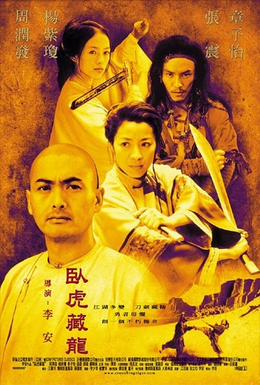
 "Crouching Tiger, Hidden Dragon" stars Chow Yun-fat, Michelle Yeoh, Zhang Ziyi, Chang Chen, Lang Sihung, and Cheng Pei-pei. Released in Taiwan on July 7, 2000, followed by the United States on December 8, 2000, the film has two warriors attempting to retrieve an ancient sword. The film was directed by Ang Lee, who is known for directing films such as "Sense and Sensibility", "Hulk", "Brokeback Mountain", "Life of Pi", and "Gemini Man". It is based on the Chinese novel by Wang Dulu. The wuxia genre has been the source of inspiration since the beginning of history regarding its fictional stories involving martial artists. Because of its popularity, the genre has expanded to many types of media, including literature, comics, television, video games, and film. Since the 1920s, movies have introduced their audiences to wuxia through action choreography and storytelling. They even made several actors from the genre, like Cheng Pei-pei, Jet Li, and Michelle Yeoh, into big-time stars. However, the biggest turning point of wuxia took place in 2000, when the genre gained more popularity among Western audiences through Ang Lee's award-winning action classic, "Crouching Tiger, Hidden Dragon". With its captivating story and martial arts sequences, the film became a critical and commercial success, earned ten Oscar nominations, including Best Picture, and is often cited as one of the best wuxia films ever made. It even inspired Hollywood to make their own attempts at the genre with films like "The Forbidden Kingdom" and "Kill Bill". This weekend, the movie is re-released in theaters with a 4K restoration 23 years after its original release. Seeing that I have never watched the film from start to finish, I decided to use this opportunity to experience it for the first time in a way that's meant to be seen: on the big screen. With that said, let's revisit the action classic and see if it still holds up. The story takes place during the 19th-century Qing dynasty in China and tells the tale of two warriors. Li Mu Bai (Yun-fat) is a renowned Wudang swordsman, while his friend Yu Shu Lien (Yeoh) is a warrior who heads a private security company. The two have feelings for each other but can't express them due to Shu Lien being engaged to Mu Bai's late friend, Meng Sizhao, and the two being bound by loyalty. One day, Mu Bai, choosing to retire, tasks Shu Lien to give his 400-year-old sword, the Green Destiny, to their benefactor Sir Te (Sihung) in Beijing. There, Shu Lien meets Jen Yu (Ziyi), the daughter of Governor Yu, who's in an arranged marriage. When a masked thief infiltrates the estate and steals the Green Destiny, Shu Lien, along with Mu Bai and their new allies, travel to retrieve the sword while battling the Jade Fox (Pei-pei), who's responsible for the death of Mu Bai's teacher. I didn't get fully invested in the genre until 2018 when I saw "Kung Fu Panda" and "The Forbidden Kingdom". Afterward, I gradually appreciate the wuxia genre and even Chinese culture through the art of film. This led me to experience more movies released outside the United States, even the martial arts ones. But, of course, even with my expansive knowledge of filmmaking, I still neglected to watch "Crouching Tiger, Hidden Dragon" during my spare time. Although, I was introduced to it through its 2016 sequel from Netflix, "Crouching Tiger, Hidden Dragon: Sword of Destiny". Long story short, it was an inferior follow-up to the 2000 classic despite being directed by the first film's action choreographer Yuen Wo-ping. Luckily, that didn't stop me from becoming curious about Ang Lee's wuxia masterpiece. Seven years after watching "Sword of Destiny", I finally gained the opportunity to experience "Crouching Tiger, Hidden Dragon" for myself, in an empty theater, no less. All I can say is that it was way better than the Netflix sequel. This is mainly due to its engaging drama, packed with enough interesting characters and scenarios to balance well with its incredible action sequences. The film offers a classic "good vs. evil" storyline involving a swordsman coming out of retirement to avenge his master's death and retrieve his mighty sword. But it's also an old-fashioned and poetic depiction of love, loyalty, and forging one's destiny in a traditional society. Its storytelling and themes deliver a satisfying amount of emotion and beauty and hearken back to the old-school wuxia films of yesteryear through Ang Lee's stylish direction. Ang Lee has made various movies that allowed him to express his cinematic presentation and approach toward his characters, including "Hulk" and "Life of Pi". For "Crouching Tiger, Hidden Dragon", Lee was able to balance the complexity of the characters with a style that's as swift and elegant as their fighting skills. The result is a visually stunning and narratively compelling action drama that's only grand in its artistry and characters, not just the action set pieces. There had been talks about the cast and their different Chinese accents when the film was first released, especially Chow and Yeoh. Despite that, they impressed their audiences well enough to become the superstars they are today, especially Yeoh. Personally, I thought their performances were great, with Chow Yun-fat and Michelle Yeoh being superb together as Mu Bai and Shu Lien, respectively. Yeoh provides a sense of delicacy and wholesomeness that reflects her character's fierce and honorable personality. At the same time, Yun-fat offers a compelling depiction of a warrior surrounded by guilt for his past and suppressed feelings toward Shu Lien. Yeoh has come a long way in her career, especially since she recently gained traction from "Everything Everywhere All at Once", and her role in "Crouching Tiger" is still a great reminder of that. Zhang Ziyi was also terrific in her role as Jen, and Cheng Pei-pei makes for a convincing antagonist as Jade Fox, a woman obsessed with learning Wudang skills. But, of course, the true stars of "Crouching Tiger, Hidden Dragon" are the technical aspects, mainly the action sequences. Nowadays, we have several movies with fight scenes relying on shaky camera maneuvers, quick cuts, or both to make the action more "exciting". But in reality, they're just painful eyesores that overshadow their action choreography. "Crouching Tiger, Hidden Dragon" is one of the movies that remind us of the genuine excitement of their action sequences. Choreographed by Yuen Wo-ping and shot beautifully by Peter Pau, the fight scenes between the characters are fierce, heart-pounding, and swiftly energetic. Yes, they also involve people walking or gliding in the air, which looked goofy at first but became a remarkable sight to behold back in the day. Speaking of beautifully shot, the cinematography is another highlight of the film's quality. The scope works wonders for its action, but when it comes to showcasing the excellent production design and the drama, it's nothing shy of gorgeous and majestic. It's enough to keep me distracted until the next exhilarating fight scene comes along. Overall, "Crouching Tiger, Hidden Dragon" remains a spectacular example of combining classic storytelling with great action and engaging drama as it was 23 years ago. The movie left a crucially successful mark in the careers of those involved and the genre's early days in the Western market. It's not just because of how great it was and its inspiration for the films that came after it. It also gave actors like Yeoh and Ziyi a chance to expand their careers due to the Western audience's interest in them. Without this film and the other wuxia movies like "Hero" and "Memoirs of a Geisha", they wouldn't have been where they are now in the film industry. So not only do I appreciate the film for introducing us to the genre and the actors involved, but I also respect the filmmaking techniques used to craft this stunningly thrilling martial arts masterpiece. It is worth a watch if you're a fan of the wuxia genre or even action movies.  A
0 Comments
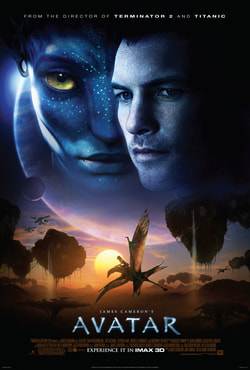 "Avatar" stars Sam Worthington, Zoe Saldana, Stephen Lang, Michelle Rodriquez, and Sigourney Weaver. Released on December 18, 2009, the film has a former Marine and a mining team exploring a mysterious planet. The film was written and directed by James Cameron, who also directed films such as "The Terminator", "Aliens", "True Lies", and "Titanic". We have several directors who understand the importance of cinematic experiences, including Christopher Nolan, Guillermo del Toro, and James Cameron. Cameron has been widely known for pushing the boundaries of cinema, not just in storytelling but mainly in the technology he uses. Time after time, he has impressed thousands of film enthusiasts and audiences with his groundbreaking visuals in his movies, mainly "Terminator 2" and "Titanic". In 2009, the filmmaker made cinematic history once again with an original sci-fi movie that transported people to a world unlike any other. That movie was "Avatar", an epic blockbuster that utilized new types of technology, including motion capture, and revived the 3D trend, for better or worse. Thanks to its groundbreaking visuals, the movie broke several box office records and became the highest-grossing film in the world at the time. Additionally, it earned three Academy Awards, including Best Visual Effects. As time passed, however, the film was quietly forgotten by people who only see it as a good or bad movie, with most of them calling it "Pocahontas in Space". The visuals are the only reason why "Avatar" earned its popularity. Its storytelling, not so much. However, that didn't stop Cameron from expanding his blockbuster with its sequels, with the first long-awaited follow-up arriving this weekend. To celebrate this occasion, I decided to look back on the one that started it all and see if it's highly misunderstood or a typical blockbuster that favors spectacle over substance. With that in mind, let's head to Pandora and find out for ourselves. The movie takes place in the year 2154. Humanity has left Earth due to the depletion of natural resources. They eventually arrived at Pandora, a moon in the Alpha Centauri star system where it houses a valuable mineral known as unobtainable. Additionally, it is inhabited by the Na'vi, a species of tall, blue humanoids that live in harmony with nature. The Resources Development Administration is formed to colonize Pandora and mine the rare mineral hidden underneath the planet. The story's primary focus is Jake Sully (Worthington), a disabled former Marine sent to Pandora to replace his deceased twin brother. He participates in the Avatar Program, led by Dr. Grace Augustine (Weaver), which has humans using genetically engineered Na'vi bodies to explore Pandora and interact with its natives. While exploring the wildlife, Jake meets and befriends Neytiri (Saldana) and her clan, the Omaticaya, who teaches him the ways of the Na'vi. However, when the head of the mining operation, Colonel Miles Quaritch (Lang), plans to destroy the Na'vi's way of life, Jake attempts to save his new home. The first time I experienced this visual marvel was undoubtedly at the theater. I remember inviting my dad to see "Avatar" because we don't go to the movies as much as I do with my mom. We saw it in 3D, and I was blown away by how fantastic everything looked, from its lush locations to the designs. My dad also enjoyed it, to my surprise. So much so that we got the collector's extended cut of the film on DVD for him. In case you're wondering, this was before I switched to getting movies on Blu-ray. I haven't gone back to the film since then, mainly due to the 3D version being the best way to watch it and its waning reputation. However, since "The Way of Water" is coming out, I figured now would be the best time to revisit it with a fresh pair of critical eyes. For this review, I watched the collector's extended cut version of the movie, which includes 16 minutes of scenes not shown in the original version. Additionally, it has an alternate opening set on Earth before Jake's trip to Pandora. It's been a while since I watched the regular cut, so I can't compare the two in full detail. But I can say that the collector's extended cut is why I enjoy the director's cut more than the theatrical cut. It gives us plenty of additional scenes left on the cutting room floor and delivers more context to the film's plot. The extended cut of "Avatar" further explores Jake's background and his journey from being a former Marine to becoming the leader of an alien planet. It also showcases more of the conflict between the humans and the Na'vi. Because of this, the collector's extended cut is now my preferred version of the movie. As for the film in its entirety, it's still an impressive achievement for James Cameron and visual effects in cinema. The movie is a dazzling and visually immersive roller coaster that reflects the mass creativity of its environment and the creatures that inhabit it. When looking at it from a storytelling perspective, it's understandable where the criticisms came from regarding its similarities. It borrows plenty of elements from other movies like "Dances with Wolves", "Pocahontas", and "FernGully", making its plot far from an original piece of work. But, of course, just because a film is similar to the others doesn't mean it's automatically bad. It all comes down to the story's execution and entertainment values. Fortunately for me, "Avatar" is entertaining and emotionally grasping enough to overshadow its familiar tropes. The story represents a journey of self-discovery for Jake and an anti-war message that sees him preventing his own kind from destroying the Na'vi's home for their personal gain. While it may not be a perfect representation of its themes, the movie does benefit from its likable characters and Cameron's direction. Cameron is a beast when he's showcasing the majesty and grandness of the visuals. However, "Avatar" also proved that Cameron can make the story entertaining and the action epic and intense, mainly in its third act. The showdown between the RDA and the Na'vi is one of my favorite parts of the film, mainly for its visual splendor and thrilling set pieces. The cast also did a solid job with their performances, including Sam Worthington, who offered a considerate amount of charm and drama for Jake. "Avatar" is one of the few movies where I was introduced to Worthington. The last film I saw him in was "Hacksaw Ridge", which was way back in 2016, as he only appeared in lesser-known movies after that. Let's hope that "The Way of Water" can put him back on the Hollywood map. Zoe Saldana also did very well with her motion capture performance as Neytiri regarding her emotional weight. Stephen Lang was compelling as the heartless and vicious colonel, and Sigourney Weaver is undeniably attention-grabbing as Grace. As I mentioned earlier, the visual effects played a huge part in the film's success. Regarding its production designs, the Na'vi, and the creatures, the visuals represent something you'd find in a dream or a "Star Wars" film, whichever makes sense to you. The fact that it took Cameron years to complete due to waiting for the technology to involve shows how ambitious he is with his intended vision. So did the visual effects still hold up 13 years later? Honestly, yes, it did. The CGI still looks fantastic when considering the designs and the memorable settings. It's one of the few films that don't look dated even after decades of existence. You can rewatch it 30 years later and think, "Wow, these effects still look great". If that's the case, I have high hopes that its sequel will blow me away as this film did. Overall, James Cameron's "Avatar" remains a technical marvel that relies on imaginative visuals and a strong sense of wonder. Its storytelling may not be on the same levels as the other sci-fi masterpieces, but it serves as a great example of Cameron's ambition for filmmaking technology. The cast was solid in their roles, Cameron's direction was top-notch in displaying the background's grandness, and the visual effects were brilliant and absorbing. Some may argue that the movie only existed to popularize the 3D trend. However, when you look at the bigger picture, "Avatar" is part of the reason cinema still exists, even after the COVID pandemic. People go to the theater to be immersed in the unknown and be captivated by the imagination and thrills, whether the narrative is excellent or not. Films like "Avatar" succeed in providing that escapism, which led to their massive successes at the box office. As long as there are more films that can deliver a unique cinematic experience, especially "The Way of Water", there's still hope that cinema can survive the future.  B+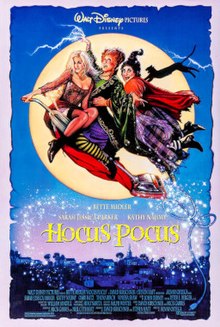 “Hocus Pocus” stars Bette Midler, Sarah Jessica Parker, Kathy Najimy, Omri Katz, Thora Birch, and Vinessa Shaw. Released on July 16, 1993, the film is about a teenage boy who accidentally resurrects a trio of witches. The film was directed by Kenny Ortega, who also directed films such as “Newsies”, “High School Musical”, and “Descendants”. Hold on to that witches brew, boys and girls, because I got another witch-related film to talk about, and it’s from Disney. This should be fun. Before he turned “High School Musical” and “Descendants” into cultural musical phenomenons, choreographer/director Kenny Ortega helmed two theatrical films for Disney, “Newsies” in 1992 and the main topic of my review, “Hocus Pocus” in 1993, with the latter being a straight-up fantasy-comedy instead of the usual musical film that Ortega is known for. The film was released during the summer season instead of Halloween in order to attract a lot of children that are off from school. Unfortunately, the strategy didn’t turn out as well as the studio hoped, mostly due to being overshadowed by another family film, “Free Willy”. In addition to being a commercial disappointment, it also received mixed-to-negative reviews from critics upon release. Years later, the film was rediscovered by audiences through annual airings on television, resulting in massive spikes in home video sales every Halloween season. It became a cult classic for Halloween fans later on. Given how popular it is, I thought it would be good for me to finally see what makes it a “classic” to begin with, especially since Disney is already developing a sequel to it for Disney+. I didn’t remember watching this film all the way through as I was growing up because of my focus towards other Halloween-related materials. With Halloween being today, I figured now would be the best time for me to experience this kid-friendly spook-fest from start to finish. With that in mind, let’s ride our brooms into the sky and see what I’ve been missing. The story follows Max Dennison (Katz), a teenager who just moved from Los Angeles to Salem, Massachusetts with his parents and his younger sister Dani (Birch). While trick-or-treating with Dani, he encounters a mysterious cottage and inadvertently revives a trio of witches (known as the Sanderson sisters), who were hanged for their crimes 300 years ago. They placed a spell on themselves so that they will be resurrected during a full moon on All Hallows’ Eve when a virgin lights the Black Flame Candle. The sisters, Winnifred (Midler), Sarah (Parker), and Mary (Najimy), have the power to absorb a child’s youth and regain their own in order to live forever. In terms of them making themselves young for eternity, they’re the 90s interpretation of Mother Gothel from “Tangled”. With the help of his new friend Allison (Shaw) and an immortal black cat with a mysterious past (voiced by Jason Marsden), Max and Dani must find a way to send this villainous trio back to their graves once and for all before they harm any more children. This is another dark fantasy film from Disney that combines kid-friendly scares with a sense of fun and charm in its environment and the characters, which was something that “The Nightmare Before Christmas” did three months after it. What these two films have in common is that they’re both made by Disney, they’re both classified as cult classics, and they’re both part of a Halloween tradition for families who are in need of some spooky fun without giving the kids nightmares for weeks. What sets them apart, however, is that “The Nightmare Before Christmas” is an animated masterpiece that has wonderful characters, fantastic visuals, memorable songs, and an engaging plot. “Hocus Pocus”, on the other hand, is a harmlessly hokey live-action horror comedy that features bland characters and a story that’s as thin as ice, but admittedly, it isn’t without its fair share of likable moments. I think what made “Hocus Pocus” such a Halloween classic for people is that even though the story was a bit of a mess (in terms of the characters and the direction it took), it had that type of appeal in its narrative that kept them from resisting its mesmerizing spell. The majority of that appeal has to do with the three main actresses: Bette Midler, Sarah Jessica Parker, and Kathy Najimy. They are, without a doubt, the best parts of the film because of the energetic chemistry between them and the distinct personalities they brought to their characters, the Sanderson sisters. I also really liked the characters’ experiences with modern technology as well as the modern Halloween traditions, which brought out some pretty good laughs. Yes, they’re obviously the main villains in the film, but they’re the type of villains that you couldn’t help but love every time they’re onscreen. As for the main characters, which consists of Max, Dani, and Allison, that’s where the film fell flat for me. For the character of Max, the film was attempting to portray a fish-out-of-water story that has him struggling to fit in when he moved to Salem with his family and trying to impress Allison. It also displays the sibling relationship between Max and his little sister Dani. With those elements, the film had the opportunity to be a true Halloween classic. Problem is, it lacked the proper depth needed to make me care more about these characters, especially Max, who I thought was pretty mediocre in terms of character development. The young actors’ performances for these characters were also not as highly memorable as the main actresses, although Thora Birch was the most tolerable as Dani. On the plus side, it did feature a couple of well-known supporting actors, such as Jason Marsden, who is known for providing the official voice of Goofy’s son Max Goof, and Doug Jones, the actor responsible for portraying some of Guillermo del Toro’s most memorable creatures. Jones plays the zombified Billy Butcherson who is sent by Midler’s Winifred to catch the main characters, in case you’re wondering. Some of the visual effects held up fairly well for a film that’s made in the 1990s, especially the practical ones. The CGI for the cat’s facial expressions can be a bit weird at times. Fortunately, it didn’t get to the point where it looked jarring or dated. Overall, “Hocus Pocus” still has its share of issues that prevented it from successfully casting its spell, but it also has its share of moments that made it an enjoyable Halloween treat in the first place. It’s easy for me to admit that it’s not a masterpiece when it comes to its story and the main characters. However, it did its job at being a harmless family film that was just made to entertain the young kids and their parents as well as the people who grew up with it. The chemistry between the three main actresses, its respectable amount of spooky charm, and its tolerable use of special effects are what kept this film going strong today and will continue to do so for many years to come. Here’s hoping that its legacy doesn’t get tarnished by its upcoming sequel. 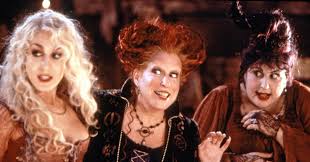 C+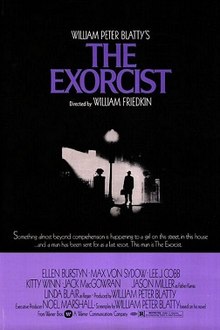 “The Exorcist” stars Ellen Burstyn, Max von Sydow, Lee J. Cobb, Kitty Winn, Jack MacGowran, Jason Miller, and Linda Blair. Released on December 26, 1973, the film has a mother teaming up with a couple of priests to rescue her daughter from a demon. The film was directed by William Friedkin, who also directed films such as “Good Times”, “The French Connection”, “The Guardian”, “Rules of Engagement”, and “Killer Joe”. It is based on the 1971 novel of the same name by William Peter Blatty, who also wrote and produced the film. It’s that time of year again. The weather’s getting cold, the leaves are changing colors, and everyone is setting up their spooky decorations. That’s right, my friends, it is once again October, which means Halloween is just around the corner, which means I now have the urge to watch some of the creepiest films and shows that I could find on television, including the one that I’ve been waiting to talk about since the day I reached the age of 17. Horror films in general have been quite popular nowadays thanks to the involvement of producer Jason Blum and his production company, but some of them weren’t able to capture the spine-tingling spirit that the others accomplished back in the 1970s. Before we had the likes of Mike Myers, Jason Voorhees, and Freddy Kruger haunting people’s nightmares, there was this one person that’s so terrifying, so nightmarish, and so disgusting that it gave people chills every time they think about them. That, my fellow readers, is a demon in a 12-year-old girl's body. If you thought that monsters and ghosts were scary, try having a supernatural demon control your actions. That will surely keep you awake for days. There are plenty of films that deal with demonic possessions, but none of them came close to the one that started the trend, William Friedkin’s “The Exorcist”, the film that made everyone peed their pants with fright and vomit all over the place. Despite a troublesome production and multiple concerns over its content, the film became a commercial success with multiple people waiting in long lines during the cold winter days to experience it either for the first time or more than once. I guess people wanted to celebrate the day after Christmas by watching a horror film that involves a possessed girl vomiting on a priest. I’m beginning to think that she’s not the only one who needed to be exorcised. Its success lead the film to become the first horror movie to earn an Academy Award nomination for Best Picture and spawn a franchise that consists of two sequels, two prequels, and a television series that lasted for two seasons. It also went on to become a horror classic among critics and audiences many years later and a major influence on pop culture. Now, here’s the thing about my experience with the film. I have heard a lot of great things about it, but I haven’t actually watched it from start to finish until now. Maybe I was too nervous or I just didn’t have the time to see it for myself. My mind works in mysterious ways. Since I got nothing to do this week, I figured now would be the best time for me to finally see if it actually deserves the title “horror classic”. Plus, it would give me the opportunity to review more horror classics later down the road. And now, without further ado, let’s get our freak on. The story follows Chris MacNeil (Burstyn), a single mother who lives in Georgetown with her 12-year-old daughter Regan (Blair). Chris is working as an actress for a film helmed by her friend/associate Burke Dennings (MacGowran). One day, Regan begins to act strangely after coming into contact with a Ouija board, and by strangely, I mean using obscene language, speaking backwards, and having abnormal strength. After consulting a number of physicians, including Father Damien Karras (Miller), Chris later discovers that Regan is possessed by an ancient demon known as Pazuzu. With the help of a veteran Catholic priest Lankester Merrin (Max von Sydow), Karras must perform an exorcism to rescue Regan before her soul is lost forever. I was hoping that I would watch it on one of the streaming services for free, but I wasn’t able to find it anywhere. So I decided to rely on one of the cable channels to view it. Despite having to suffer through a bunch of commercial breaks and edits made for television, my first experience with it was pretty much what I expected it to be. Creepy, but satisfying. Rather than being a straight-up horror film with jump scares and gore appearing every few minutes or so, “The Exorcist” comes across as a dialogue-driven supernatural drama that involves the characters’ perspectives of this frightening situation and happens to have horror elements in it. This could test the patience of those who wanted to get to the good stuff right away, especially since the film is two hours long, but it also gives the audience time to get to know the characters before they’re sent to face the demon in the finale. You have Chris and Regan whose relationship with one another changes after the latter becomes possessed, and you have Damien Karras who is struggling with his faith in God. The film was able to explore these characters and their relationships with each other in a tolerant and engaging matter without rushing into the scary stuff head-on, which was something that most supernatural horror films in recent years failed to accomplish. Now you may be wondering what caused this film to still have an everlasting impact on a lot of horror fans since its initial release. Was it the eerie atmosphere, the practical effects, the music, or the unnerving sequences? The answer is all of the above. William Friedkin proved to be a talented filmmaker when it comes to the quality, but he also proved that he can provide elements that are unsettling and realistic rather than cheesy and intolerable, such as the performances from the cast and its alarming sense of eerie and dread. Ellen Burstyn was fantastic in her role as Chris as she was able to deliver an uncomfortable, but fulfilling, range of emotions without coming off as laughable. Jason Miller and Max von Sydow also delivered some great performances as Karras and Merrin respectively. Linda Blair as Regan was also the best part of the cast because of her reactions while being possessed. Similar to Burstyn’s performance, Blair’s emotional range was both haunting and effective in terms of the film's tone. There were some sequences that still proved to be quite alarming as of today thanks to some convincing special effects and its atmosphere, such as the cerebral angiography scene and the exorcism sequence in the third act. If you have read the fact that people wound up fainting or vomiting after viewing those sequences, that’s how you know how shocking they were. When I watched the cerebral angiography sequence for the first time in its entirety, I didn’t feel sick or faint at all. All I felt was uneasiness and nothing else. I can understand that it’s unnecessary, but I can also understand that it adds to the disturbing tone that the film was going for. If you get queasy very easily, I would advise you to not watch that scene. I would also give props to the sound editing and Jack Nitzsche’s musical score for emphasizing the scares and the atmosphere. The sound effects, in particular, weren’t as technical as they were today, but that’s what made it so terrifying (and nostalgic) to begin with. Whether it’s the characters yelling in pain or the demon’s voice, the sound editing had a proper amount of creepiness that’ll get stuck in your brains for quite a while. Overall, “The Exorcist” is an unnerving, yet riveting, experience that should be viewed by every horror fan in existence. The fact that it’s more dialogue-driven than scare-driven may test some people’s patience, but aside from that, it’s still an effective horror film that cares more about story and characters rather than having cheap jump scares appear every few minutes. The cast was great in their roles, Friedkin’s direction was impressive, and the scares were still effective to this day in terms of the practical effects and the atmosphere. It’s too bad that I wasn’t able to watch the uncut version of the film, but I have to take what I can get because I had been neglecting it for far too long and I really wanted to share my experience with you guys. Maybe someday I’ll take another look at it once it’s made available for free on one of the streaming services. Until then, the television version that I watched will have to do for now. 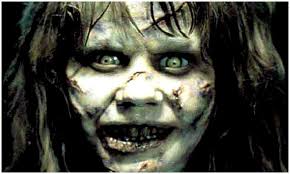 A-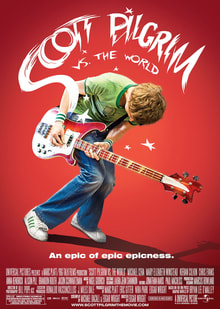 “Scott Pilgrim vs. the World” stars Michael Cera, Mary Elizabeth Winstead, Kieran Culkin, Chris Evans, Anna Kendrick, Alison Pill, Brandon Routh, and Jason Schwartzman. Released on August 13, 2010, the film is about a slacker musician who must defeat his new girlfriend’s seven evil exes. The film was directed by Edgar Wright, who also directed films such as “Shaun of the Dead”, “Hot Fuzz”, “The World’s End”, and “Baby Driver”. It is based on the graphic novel series Scott Pilgrim by Bryan Lee O’Malley. You want to know what it feels like to read a comic book, play a video game, and watch a music video at the same time while being high on drugs? Then have I got a film for you. Two months ago, I reviewed a film that is celebrating its tenth anniversary this year, which is Christopher Nolan’s “Inception”. Today, I’m reviewing another film that is also celebrating its tenth anniversary this year, and it’s something that I remember fondly. Back in the day, I usually go to the movies with my mother even though I was old enough to drive. Then one day at the mall, I convinced her that I would see it on my own at the built-in AMC theater while she does her errands, and the rest is history. That was the day that lead me to feel comfortable with navigating the cinema and pay for the tickets and snacks all by myself, and I got this film to thank for it. It also got me interested in Edgar Wright’s other works, so bonus points for that. Despite not being as successful as Wright and Universal Pictures had been hoping for in terms of the box office, the film went on to become a cult classic and became well-known by critics and audiences for its transmedia storytelling, which is combining many different techniques to form a compelling narrative. I believe that this is one of the films that I shared my thoughts on earlier on Facebook more than five years ago. You know, before I decided to make my blog. Now that I have my own website, I decided to give this one the proper review it deserves, and what better way to do that than during its tenth anniversary celebration? Like my other classic reviews, I will do my best to not give away any major spoilers in case you haven’t watched the film nor read the source material it’s based on. The film tells the story of Scott Pilgrim (Cera). He’s a 22-year-old slacker who lives with his roommate Wallace Wells (Culkin) and plays for a garage band known as Sex Bob-Omb that consists of him and his friends Stephen Stills (Mark Webber) and Kim Pine (Pill). He’s also dating Knives Chau (Ellen Wong), a high-school student who’s also a “Scott-aholic”. One day, Scott takes an interest in Ramona Flowers (Winstead), a young woman who works as an Amazon delivery girl. In order to date Ramona, however, he must challenge and defeat her seven evil super-powered ex-boyfriends. Why did they have superpowers? I have no idea. He also attempts to help the band win a competition that is sponsored by record executive Gideon Graves (Schwartzman). In addition to combining action and comedy with romance, the film represents a narrative that uses visual elements and easter eggs from comic books, video games, and music videos to create a surreal and somehow irresistible experience that felt fresh and exciting. After a decade since its release, it still has that same appeal that will satisfy those who are curious as well as people who grew up reading comics and playing arcade games with their friends. This is a film that’s never afraid to have fun and be creative with its bizarre concept, and it’s all thanks to Edgar Wright’s superb sense of direction. Wright had a clever way of mixing the fundamentals of action and comedy with a substance that audiences can relate to, resulting in a blockbuster that’s both riveting and heartfelt. While the “romance” part can be a bit corny at times, it didn’t get to the point where it made the entire film unwatchable thanks to the chemistry between the cast. Its screenplay by Michael Bacall and Wright did well in showcasing the basics of teen awkwardness and its coming-of-age themes like taking responsibility for one’s own mistakes, learning to let things go, and of course, understanding the true meaning of love. I believe that people who either experienced that phase themselves or are experiencing it right now should be able to relate to its themes while they drown themselves in the sea of geek culture. The cast in the film did a great job with their performances, especially Cera and Winstead as Scott and Ramona respectively. I think there are some critics who had mixed feelings towards Cera’s performance, but honestly, I thought he nailed his character perfectly. Scott has a sense of awkwardness that makes himself likable and flawed and leads him to make some pretty dumb mistakes, mostly the ones that involve love. Michael Cera was able to successfully manifest this type of personality through his mannerisms and tone. I guess you can say that this is my favorite performance from him so far. Kieran Culkin also did really well with his role as Wallace Wells in terms of the humor, and the actors that portrayed the seven evil exes were some of the best parts of the film, especially Evans and Routh as Lucas Lee and Todd Ingram respectively. These actors knew how to have fun with their characters without taking themselves too seriously. The real cherry on top of the colorful sundae was the visual style and the soundtrack. Not only did the style offer a unique and dazzling perspective on the genre, but it also worked extremely well with the teen-related humor, the references from specific comic books and video games, and the nicely-choreographed action sequences. They made the film look like the holy grail of geek fandom. The visual effects looked amazing back when it first came out, and after rewatching it now, I’m glad to say that they haven’t aged a bit. My only concern is that some of the visuals may have a negative effect on people who have experiences with epilepsies, so if you’re one of them, proceed with caution. I also have to give props to the film’s amazing soundtrack for its mixture of rock music and video game music. Interesting fact: the film’s score was provided by Nigel Godrich, who is known for working with Radiohead as the band’s producer, which would explain why the film is so obsessed with rock and roll. Overall, “Scott Pilgrim vs. the World” is something that you have to see to believe. Not just for the story, the action, and the comedy, but for the uniqueness in its narrative. This is one of my favorite films of the 2010s because of what it brought to the experience. The visual style and the soundtrack are the two major things that made the film special in its own right, and they are backed up by its cast, Wright’s direction, and its themes. It still holds up well after a decade, and I hope it continues to hold up in the years to come and maybe inspire others to provide their own sense of imagination in their own narratives. If you haven’t seen it yet, I recommend that you do so. 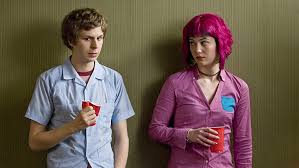 A- |

- Home
- Classic Reviews
- 2015 Reviews
- 2016 Reviews
- 2017 Reviews
- 2018 Reviews
- 2019 Reviews
- 2020 Reviews
- 2021 Reviews
- 2022 Reviews
- 2023 Reviews
- 2024 Reviews
- Movie Talk
-
Fan Fictions
-
Ed, Edd n Eddy: The Ultimate Ed-Chronicles
>
-
The 'Beginnings' Saga
>
- Ed, Edd n Eddy: The Rise of Maleficent >
- Transformers: Legend of the Black Cauldron >
- Ed, Edd n Eddy meets the Penguins of Madagascar >
- The Eds and Iron Man: Dawn of the Blowhole >
- Ed, Edd n Eddy: The Fast and the Furious >
- The Eds and Kung Fu Panda: Battle for China >
- Ed, Edd n Eddy and the Lion King: The Full Circle >
- Ed, Edd n Eddy meets Thumbelina: Revenge of the Shredder >
- Ed, Edd n Eddy: Journey to Neverland >
- Ed, Edd n Eddy: All Tangled Up >
- Ed, Edd n Eddy's Frozen Adventure >
- Ed, Edd n Eddy's Edventures in San Fransokyo
- Ed, Edd n Eddy: Return to Neverland
- Ed, Edd n Eddy vs The League of Evil
-
The 'Avengers' Saga
>
- The Eds and the Little Mermaid: Age of Extinction
- Ed, Edd n Eddy meets the Ghostbusters
- Ed, Edd n Eddy: A Sea of Adventure
- Ed, Edd n Eddy meets Anastasia
- Ed, Edd n Eddy in Who Framed Roger Rabbit?
- Ed, Edd n Eddy meets the Incredibles
- Ed, Edd n Eddy and the Lion King 2: Simba's Pride
- Ed, Edd n Eddy: Brand New Zootopia
- Ed, Edd n Eddy: Into the Sugar Rush
- Ed, Edd n Eddy and the Big Sea Quest
- Ed, Edd n Eddy: Heroes Assemble
- Fastformers: Rio Heist
- The Loud Ghostbusters >
-
The 'Beginnings' Saga
>
-
Ed, Edd n Eddy: The Ultimate Ed-Chronicles
>
- Contact
- About